
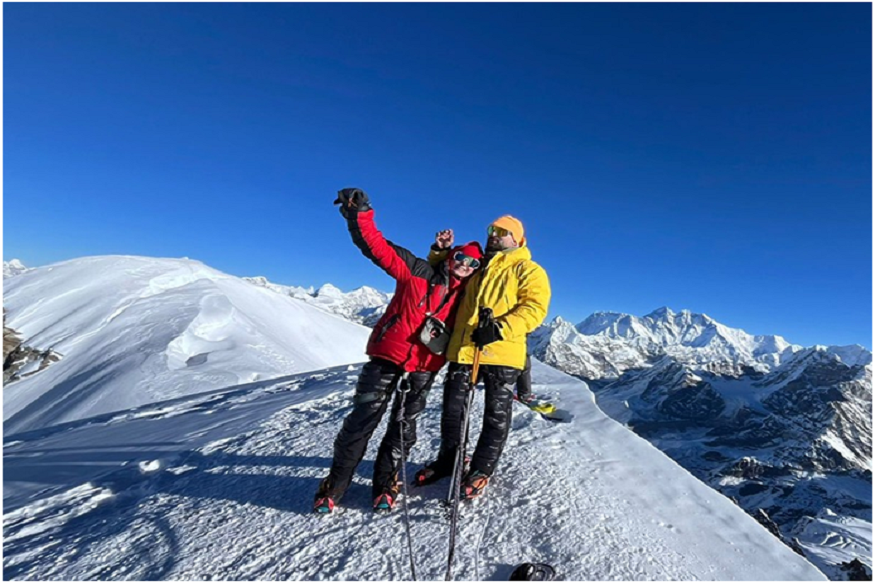
There is something strange about mountains. They do not shout; they do not chase you. They just stand there, silent, cold, and unbelievably powerful. Yet people like us keep walking toward them, spending money, time, and energy, sometimes even comfort, only to breathe less air and feel more tired. Sounds crazy when you think about it, but anyone who has ever stepped into the Himalayas understands this madness perfectly. High-altitude journeys are not only travel plans. They are emotions, longings, and curiosity; sometimes ego also. Among many adventures in Nepal, a few names keep coming back in conversations of trekkers and climbers—Island Peak Climbing, Lobuche Peak Climbing, Mera Peak Climbing, and the legendary Everest Three Pass Trek. Different routes, different challenges, but the same story deep inside: a human heart trying to go higher than fear.
Let’s walk through these experiences, not like a brochure, but like someone who sat in a teahouse, tired legs, warm tea, remembering every step.
Island Peak Climbing—First Taste of Real Himalayan Climb
Island Peak climbing is often called a beginner’s climbing peak, but that description feels a little unfair. Yes, it is considered one of the more accessible Himalayan summits, but “easy” is not a word that really belongs here. At over 6,000 meters, nothing feels truly easy. The journey usually begins along the classic Everest Base Camp trail. Same bustling villages, same prayer flags dancing in cold wind, same sound of boots on dusty paths. But somewhere after Chhukung, the feeling changes. The trekking mood slowly becomes a climbing mindset. Island Peak itself looks beautiful, almost inviting from a distance. A sharp icy summit rising from glacier fields, standing like a test, waiting quietly. Many climbers say it is the perfect first step into the mountaineering world. And they are right, but only if you respect it.
Climbing day starts in darkness. Headlamps, frozen ropes, slow movements. Breathing feels heavy, like lungs negotiating every step. Crampons biting into ice, harness tight, mind half excited and half scared. This is where reality hits—mountains are not Instagram filters. Yet, reaching the summit brings a strange silence inside. No loud celebration. Just a deep, almost private joy. You look around, and suddenly every discomfort becomes small. That thin air somehow makes emotions thicker. Island Peak Climbing is not just a climb. It is an introduction to patience, humility, and the uncomfortable truth that strength is mostly mental.
Lubuche Peak Climbing—Technical, Beautiful, Unforgettable
Lubuche Peak climbing (more commonly spelled Lobuche) carries a different personality. Where Island Peak feels like a gateway, Lobuche feels like a statement. Slightly more technical, slightly more demanding, but incredibly rewarding. The approach shares the Everest region’s charm. Stone villages, smiling locals, and suspension bridges that swing just enough to wake your nerves. But Lubuche has its own drama. The mountain rises with elegance and seriousness. Steeper ridges, exposed sections, and a climb that asks for focus, not just stamina. This is where climbers start understanding that mountains have character.
There are moments during Lubuche Peak climbing when you feel extremely alive and extremely vulnerable at the same time. A narrow ridge, wind cutting across your jacket, and nothing but space below. Fear whispers softly, not screaming, just reminding. But fear here is not the enemy. It becomes a companion. It sharpens awareness. Every movement becomes deliberate. Every breath feels valuable.
The summit view from Lobuche is something difficult to describe without sounding exaggerated. Peaks stretching endlessly, clouds floating below, the world suddenly feeling very wide and very small. It is not only scenery; it is a perspective shift. Lubuche Peak climbing often attracts those who want more than a beginner climb but not yet an extreme expedition. A perfect middle ground, where challenge and beauty walk together.
Mera Peak Climbing—Height, Endurance, and Endless White Horizons
Mera Peak Climbing is a different story altogether. Known as one of the highest trekking peaks, Mera is less about technical difficulty and more about endurance, altitude, and mental steadiness. The route to Mera feels remote, wild, and deeply peaceful. Fewer crowds, quieter trails, forests that seem untouched, and valleys that stretch like paintings. It is the kind of journey where you start forgetting city noise completely. Mera Peak does not intimidate with steep drama like Lobuche, but it slowly, quietly tests you through altitude. Days of gradual ascent, body adjusting, mind waiting. The real opponent here is thin air itself.
Climbing Mera feels like a long conversation with your own limits. Steps are not rushed. Everything slows down. Even thoughts move differently at high altitudes. Summit day often becomes a test of patience. Gentle slopes but an endless feeling. Snowfields stretch wide, the horizon always looking just a little farther. Legs heavy, breathing rhythmic, determination is becoming the real fuel. And then comes the summit—a breathtaking panorama of giants. Everest, Lhotse, Makalu, Cho Oyu, and Kanchenjunga on clear days. A skyline of legends standing silently around you.
Mera Peak climbing is less dramatic and more meditative. It is about staying steady when progress feels slow. A beautiful reminder that not all victories are explosive. Some are quiet, gradual, and deeply satisfying.
Everest Three Pass Trek: The Ultimate Test of a Trekker’s Spirit
If peak climbing is about reaching summits, the Everest Three Pass Trek is about embracing the entire landscape of challenge. This trek is not a single goal; it is a series of trials—Kongma La, Cho La, and Renjo La. Each pass has its own mood, its own difficulty, and its own reward. The Everest Three Pass Trek is for those who feel that the standard Everest Base Camp route, though magnificent, is not enough. It is for trekkers who crave variety, isolation, and deeper immersion into the Himalayan wilderness. The trek feels raw, demanding, and incredibly rich. High-altitude passes, changing valleys, glaciers, frozen lakes, and long days where fatigue becomes a normal companion.
Crossing Kongma La feels like stepping into another world. Cho La brings ice, snow, and sometimes chaotic weather. Renjo La delivers one of the most stunning views in the region, a dramatic reveal of Everest and surrounding peaks. But beyond scenery, the Everest Three Pass Trek is a psychological journey. There are days when the body feels drained, when the weather feels hostile, and when comfort feels like a distant memory. Yet, those same difficult days often become the most memorable. Struggling through snow, laughing at shared exhaustion, finding warmth in small teahouses—these moments build stories that last far longer than photos.
The Everest Three Pass Trek is not casual trekking. It is commitment, resilience, and a deep dive into high-altitude life.
Why These Adventures Stay with People Forever
Something connects Island Peak Climbing, Lobuche Peak Climbing, Mera Peak Climbing, and the Everest Three Passes Trek. They are not only physical journeys. They reshape something inside. Mountains have a strange way of simplifying life. No traffic, no deadlines, no constant digital noise. Only walking, breathing, eating, and resting. A basic human rhythm we almost forget exists.
Fear becomes visible here. So does courage.
Fatigue becomes real. So does determination.
Silence becomes loud. Thoughts become clearer.
Many people go to the Himalayas thinking they will conquer the mountains. Most return, realizing mountains quietly conquered their ego instead.
And this is perhaps the most beautiful part.
The Emotional Truth No One Talks Enough About
Brochures speak about altitude, routes, and technical grades. All important, yes. But rarely do they talk about emotions.
The quiet panic before the summit push.
The self-doubt on long, steep trails.
The unexpected tears at sunrise views.
The deep gratitude for something as simple as warm soup.
High-altitude adventures bring vulnerability to the surface. You see your weaknesses clearly, but also strengths you never noticed before.
Island Peak Climbing might teach the first lesson of exposure.
Lubuche Peak climbing might introduce respect for precision.
Mera Peak Climbing might reveal endurance you did not know you had.
The Everest Three Pass Trek might prove that consistency sometimes matters more than speed.
Each journey leaves an imprint, subtle but permanent.
Final Thoughts from the Trail
Mountains are not for everyone, and that is perfectly okay. But for those who feel that pull, that quiet curiosity about thin air and distant peaks, these adventures offer something rare. Not luxury. Not comfort. But clarity. Island Peak Climbing, Lobuche Peak Climbing, Mera Peak Climbing, and Everest Three Passes Trek—different names, different difficulties, yet the same magic. They push the body, challenge the mind, soften the ego, and expand perspective. You return tired, maybe a little thinner, definitely poorer in wallet, but strangely richer in ways hard to explain. Because somewhere between breathlessness and beauty, between fear and determination, you meet a version of yourself that daily life rarely shows. And once you experience that feeling, mountains stop being destinations. They become part of your story.
Contact Details
——————————–
Company address: Everest Trekking Routes Pvt. Ltd.
16 Khumbu, Nayabazaar, Kathmandu, Nepal
Mobile: +977-9843467921 (Rabin)
Email: [email protected]
URL:– www.everesttrekkingroutes.com